

Before The Settlers
OR Jersey City Before It Was Jersey City

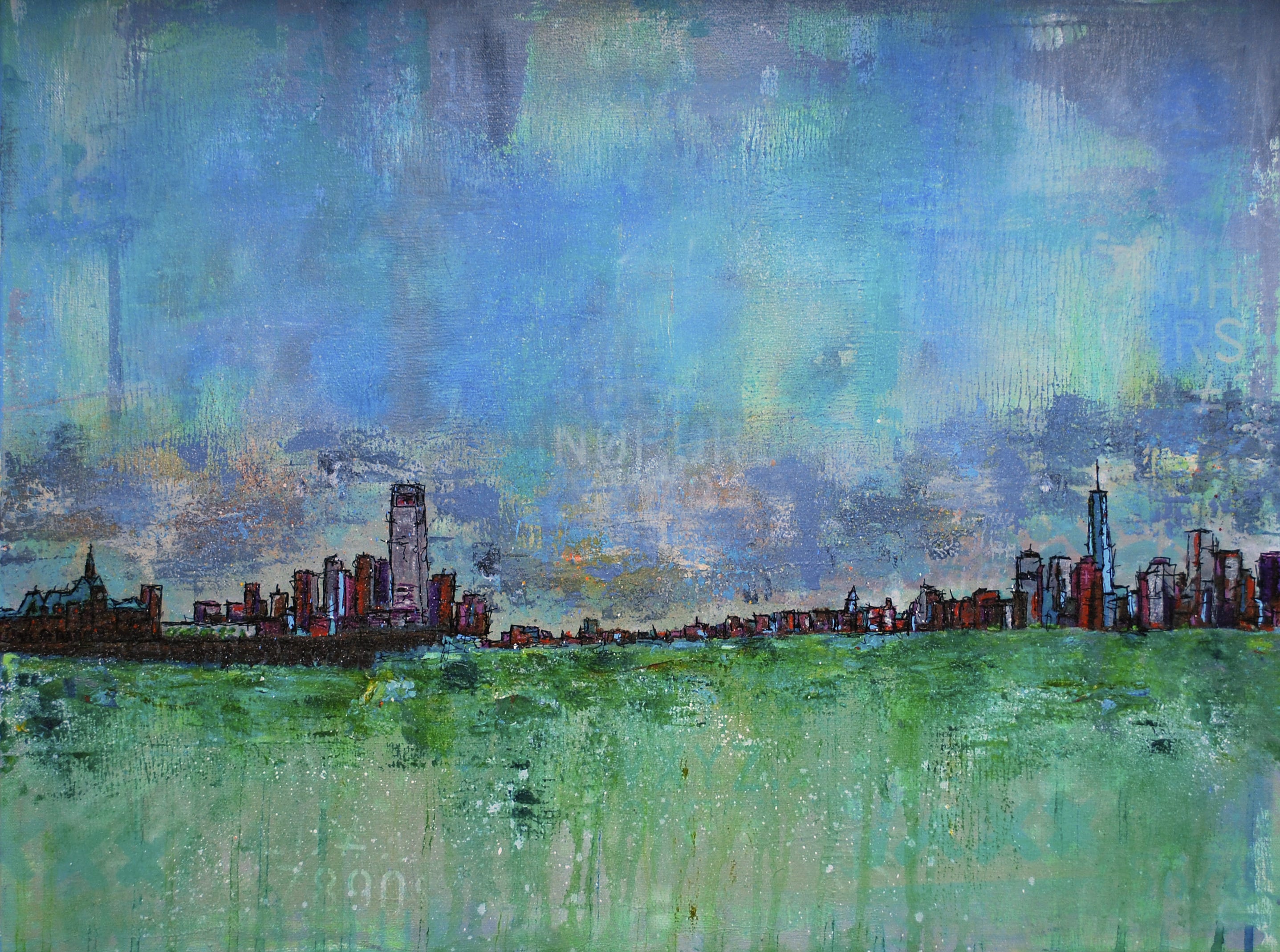
In my recent conversations with Zach Green and Tim Herrick on the podcast, both mentioned the Lenape people who lived here in Jersey City long before any of us arrived. Their observations stayed with me, reminding me of a chapter I’ve been working on for my book project, “If These Walls Could Talk.”
I originally shared an early draft of this excerpt with my paying subscribers last year on Indigenous Peoples Day, but since then, I’ve been revising and deepening the narrative. The house’s voice has grown stronger, the details richer, and the emotional core more resonant. I think this revised version deserves a wider audience, especially as we close out this year and reflect on the layers of history beneath our feet.
This is the opening of Chapter 1, where my Victorian townhouse narrator takes you back 400-500 years to when this land was Lenapehoking, the Lenape homeland. Before the stoops and the Art Deco buildings, before the streets and the Ukrainian Church on the corner, there were red oak trees reaching 150 feet high, a small waterfall at what’s now the intersection of Grand and Summit, and the Lenape people who called this place home for thousands of years.
If you find value in this kind of deep dive into Jersey City’s history, the stories that connect my podcast conversations to the very ground we walk on, please consider supporting my work. Your support helps me continue researching and writing the book, producing the podcast, and sharing these stories that might otherwise be forgotten. Most of my content and the podcast are free, but you can become a paid subscriber, and you’ll get early access to more book excerpts, behind-the-scenes podcast content, and other projects I’m working on. It would mean a lot!
Here we go - Chapter 1 Excerpt
Before the Settlers
Oh, what a perfect day to share some stories! The sun is dancing through my wavy glass windows, casting those lovely patterns I’ve watched for over a century now. I’ve put on a kettle of tea for us, though I confess it’s mostly an excuse to linger here and chat with you. Come, my dear, let’s settle on my stoop. I rather like having a proper stoop - it gives a house character, don’t you think?
You know, speaking of this “stoop,” it’s such a peculiar word isn’t it? Well, one thing is for sure, the moment someone says “stoop” instead of “steps” or “porch” you know they’re from around here. It’s a little linguistic gift from the Dutch settlers who arrived 400 years ago that has now become a regionalism.. Our language is full of such borrowed terms. English is the loveable mutt of languages, incorporating all kinds of words and phrases.
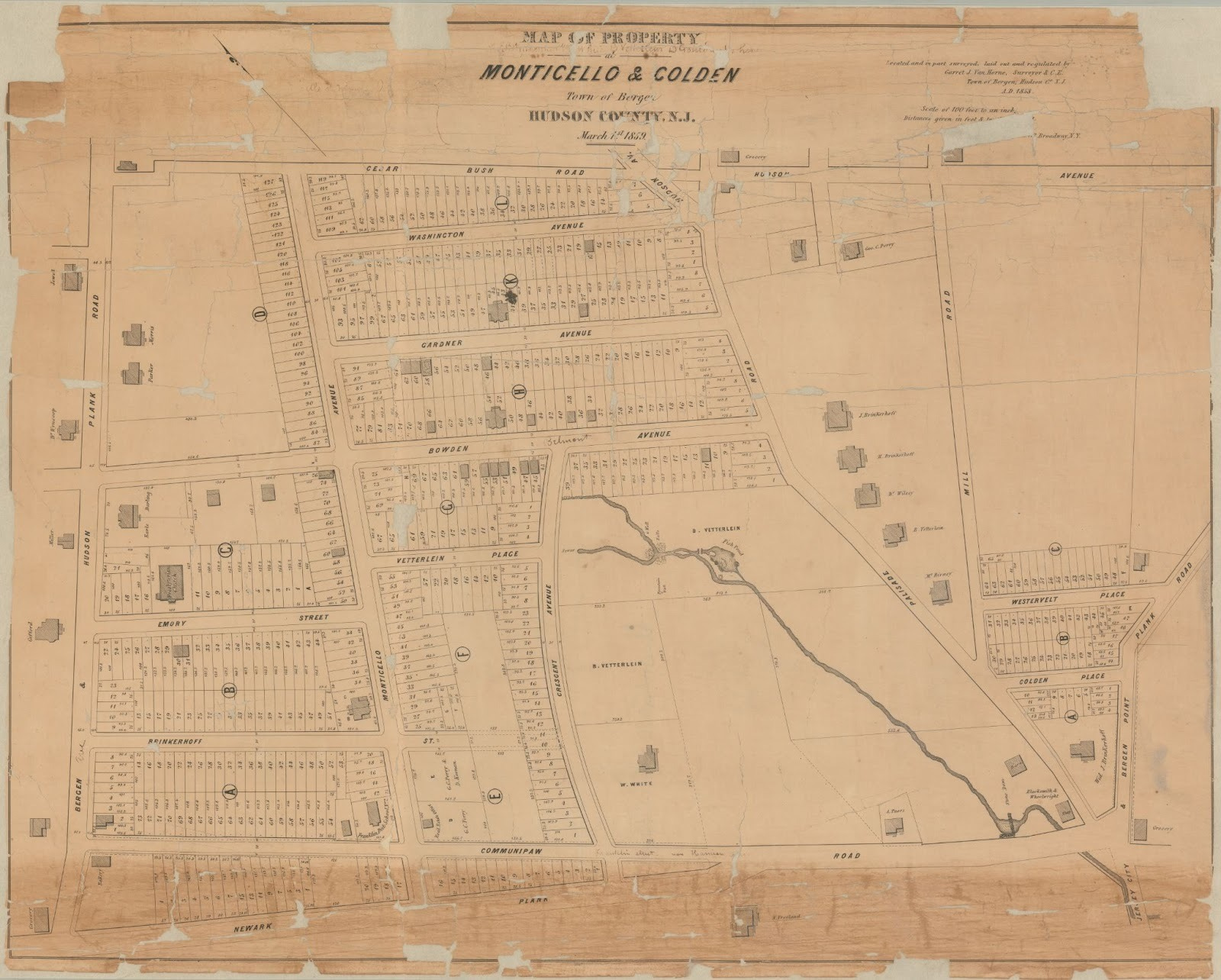
Speaking of linguistic gifts, Communipaw Avenue, just two blocks south of us, is also a fascinating name! It comes from the Lenape. The Original People. The Dutch settlers tried their best to write down what they heard, giving us spellings like Gamoenapa, Gemonepan, Communipau, and so many others. I heard that it means “public walking path” in the Munsee dialect, spoken by our local Lenape.
But here’s what breaks my heart - while we still say “Communipaw” every day, the Lenape language itself has grown quiet. The last fluent speaker, Nora Thompson Dean, passed away in 2005. Imagine that, an entire language, gone completely silent. It’s as if a voice in the world simply disappeared, carrying with it stories, wisdom, and a way of seeing things that no one else can share the same way again. To think, people’s voices can fade like that, until all we have left are the echoes, those place names woven into the landscape, holding just a whisper of what once was.
What a sight our street is today. To the right the little Ukrainian church’s golden domes sparkling at the corner, those proud 1920s Art Deco apartment buildings standing tall alongside us older Victorian ladies, each of us telling our own part of the city’s story. And if you look just so between the buildings, you can catch a glimpse of One World Trade Center reaching toward the clouds. It’s quite something, isn’t it? Almost 300,000 people call Jersey City their home now, yet our beautiful tree-lined street feels like a peaceful haven.
Across from us are a few houses from the 1960s that I once found difficult to accept. I mourned what was lost there for quite some time. But oh well, such is life! The children playing in the schoolyard next to those houses remind me of all who’ve called this land home over the centuries. Just look around you - the stories of time are locked in the houses and buildings and the people who inhabit them.
Now, close your eyes with me for a moment, dear. Let’s go back in time and imagine this place 400 years ago - before my brick walls were planted - before the streets were paved, before the very concept of “Jersey City” existed.
Our city sits on what they call the tail end of the Palisade Sill, a ridge of hard rock formed millions of years ago. The Hudson River still stretches to the east, the Hackensack to the west, with the great New York harbor to the south. And heading north, the magnificent Palisades rose like nature’s own skyscrapers. Did you know we sit about 90 feet above sea level here? Not as high as the Palisade Cliffs, but still up on a hill. And it’s a gentle rise from Bergen Square, so we’re on one of the higher points along this part of the rise. I do love having this subtle height advantage, I must admit. There are no views to speak of, but being up gives a sense of openness. And it’s an advantage during floods, it keeps one’s feet dry. I’ve never been affected too much by flooding, knock on wood!
Speaking of water, over there from where my foundation now stands, a little stream once flowed just to the east. Oh! And let me tell you something else that would astonish most people walking down Communipaw today - right where it meets Summit Avenue, there used to be the most delightful little waterfall, just 10 feet high! Sometimes when it rains heavily, I fancy I can still hear its gentle splash beneath the noise of traffic. Such secrets this city keeps!
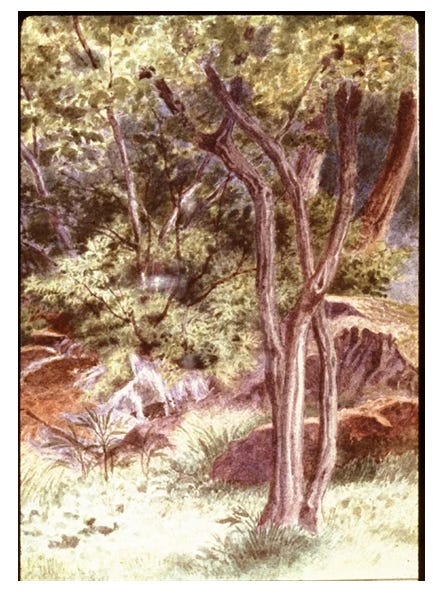
Oh the trees, Not these young feeble things that line our street today - but giants - oaks, chestnuts, hickories, and sycamores reaching 150 feet into the sky. Back then, this entire block was woodland. Right where that Ukrainian church stands, there was a magnificent red oak tree. Those woods stretched as far as the eye could see, down the rivers and up to the heights. And the fruits! Native orchards of Wild Crabapple, Chokecherry, Blue Plum, Hawberry and - well, you won’t believe this - even Pawpaws.
You’ve never tasted a Pawpaw? Neither have I, of course - houses don’t eat. But I once hosted a cook who prepared them right here in my kitchen and made them into a custard. Such excitement over this peculiar fruit - green skinned and bruising at the slightest touch, but hiding bright yellow flesh and large dark seeds inside. The dinner guests that evening couldn’t stop exclaiming over its unique flavor. “Like banana!” “No, like banana AND strawberry!” “So sweet and delicious!” I haven’t seen one ever since, though I watch for them every autumn.
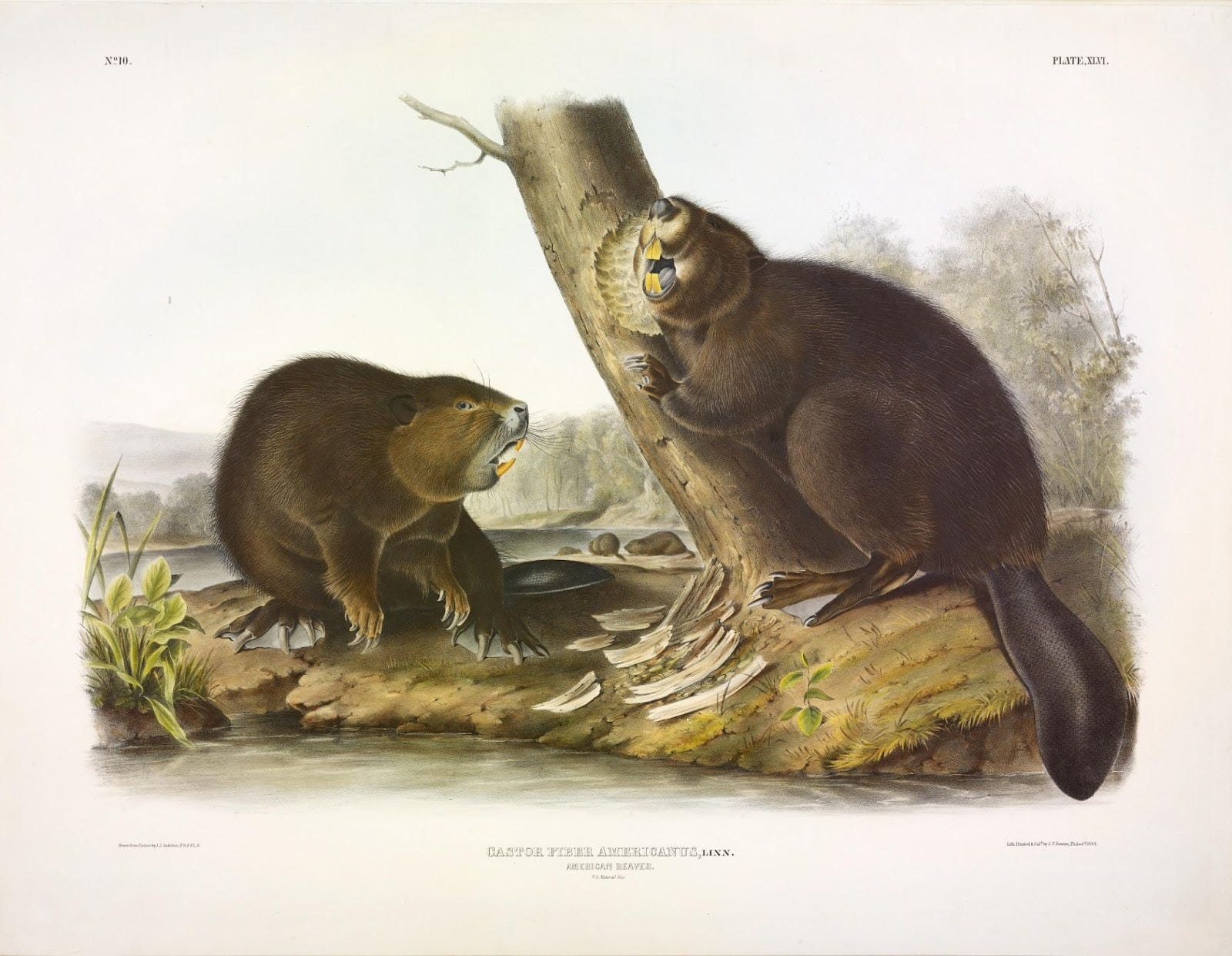
Of course, 400 years ago the wildlife was completely different. We may have lots of squirrels and gophers now, and even an occasional bald eagle in Lincoln Park, but back then, when the land was Lenape land, there were whales breaching in the Hudson and oysters big as dinner plates in the harbor. Bears and wolves roamed where cars now rumble, while deer, elk, and even moose wandered these hills. Beavers were busy building dams, regulating water levels and creating habitats for other animals. And then there were flowers, so many flowers! Black eyed susan, cardinal flower, blazing star, eastern teaberry, great blue lobelia, wild geranium, pink tickseed. Sometimes when the spring breeze blows just right, I imagine I can still catch the scent of wildflowers wafting up from the waterfront.
But goodness gracious, I’m getting ahead of myself. Let me circle back and tell you more about the true first dreamers of this land - the Lenape. They called this Lenapehoking, which meant their homeland. Such a musical word, don’t you think? It sounds much lovelier than “Jersey City,” though I’ve grown fond of that name too over my years.
The Lenape lived here for thousands of years before I was even a dream in an architect’s mind. Their territory stretched from western Connecticut to eastern Pennsylvania, and from the Hudson Valley to Delaware. And here we sit, right in the heart of it all. They were a peaceful people, though they knew how to defend themselves if needed.
What fascinates me most is how differently they saw this land compared to those that came later. To the Lenape, land wasn’t something you could own - it was like the air or sunlight, a gift from the creator to be shared with everyone.
Women played a vital role in their society, they were farmers and skilled craftswomen. It might surprise you but they also had the final say on whether the men could go to war. Imagine that! The clans even traced their lineage through their mothers, belonging to either the Wolf, Turkey, or Turtle clan.
From what I’ve gathered over my years of listening to people in my home and reading newspapers and books over the shoulders of my inhabitants, about 10,000 to 20,000 Lenape lived here when the Europeans first arrived. The Lenape traveled with the seasons, following ancient paths between summer fishing camps and winter hunting grounds, gathering places, and ceremony sites. Communipaw Avenue runs aligned with what was one of those paths.
Their villages were clusters of wigwams, with some settlements fortified with wood palisades. Their daily meals included those enormous oysters I mentioned, along with mussels and clams. They made hearty soups, cornbread, dumplings, and wild salad. I would love to smell the scents of these meals - it sounds delicious.
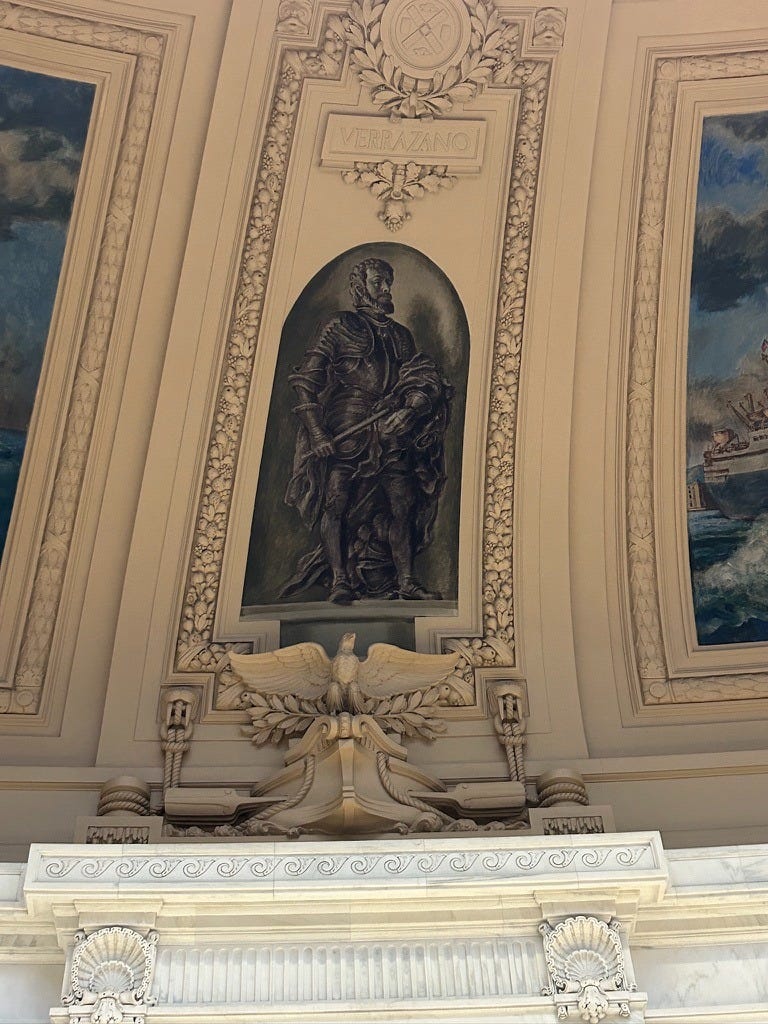
In 1524, an Italian explorer named Giovanni Da Verrazzano sailed into our harbor, you know, the guy the bridge between Staten Island and Brooklyn is named after, even though they misspelled his name on the bridge and other places. He wrote the most fascinating letter to King Francis I of France about meeting the Lenape. Picture this: thirty canoes paddling out to greet his ship, the faces of the Lenape painted in bright colors - not out of aggression, mind you but to show happiness! They shared their food with the crew and even helped guide the ship to a safe spot to anchor within the harbor. Such generosity to strangers! What a sight this must have been for the crew after such a long journey!
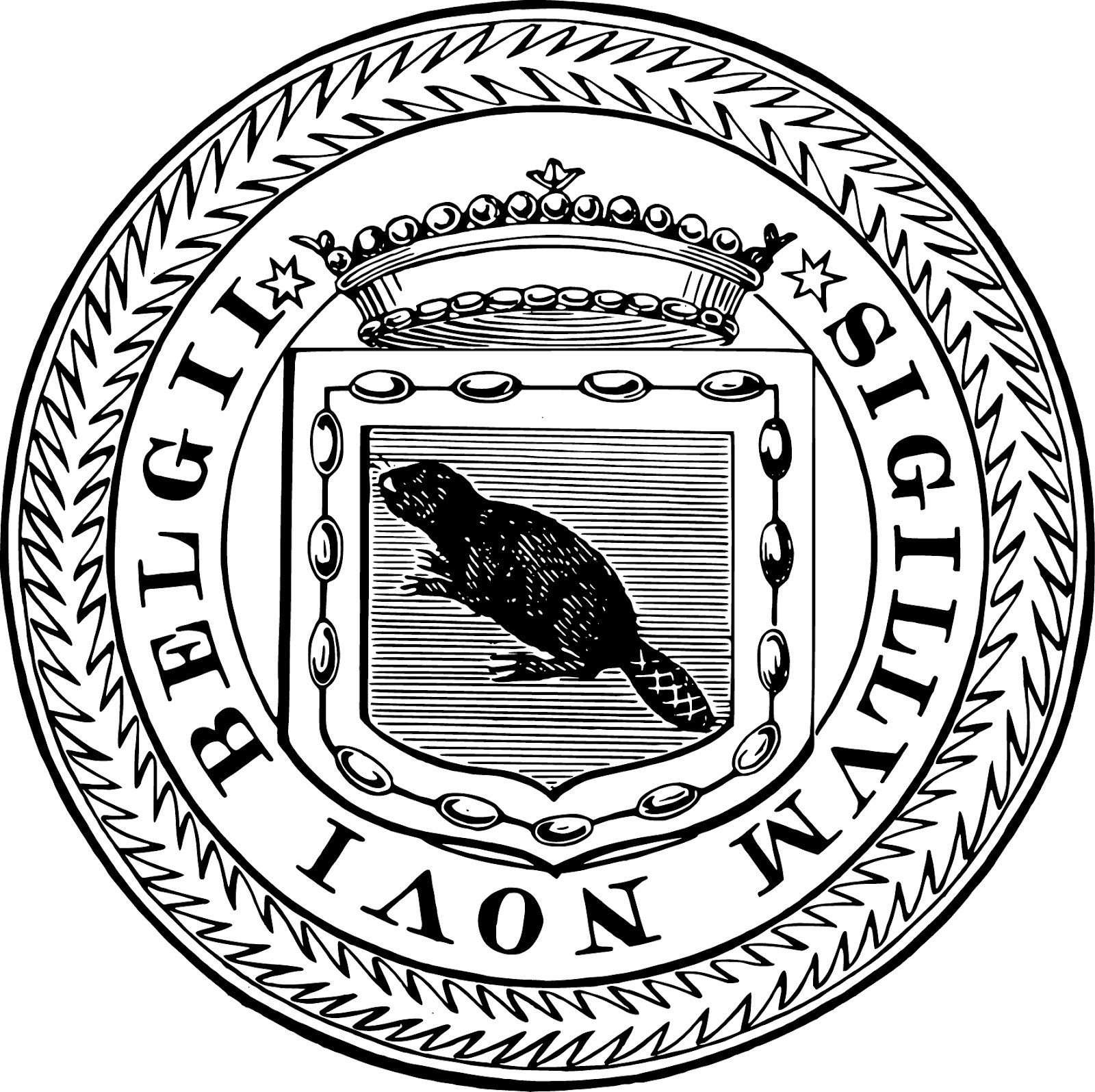
Though Verrazzano, who had tried to find a passage to Asia, wasn’t successful, his return to Europe with tales of this land’s splendid nature and abundant wildlife sparked interest. Over the next century, European traders began arriving in small numbers. The Lenape, seeing opportunities in these visitors, traded with them, particularly in beaver pelts. It was a quiet time still, these early exchanges before dreams of empire replaced dreams of small trades.
But everything changed in 1609, when Henry Hudson, an ambitious little fellow, sailed into our harbor. Like Verrazzano before him, he was searching for that mythical shortcut to Asia. Hudson had already tried twice under England’s flag, but they’d given up on him. So he signed up with the Dutch West Trading Company, who gave him a ship called Half Moon and some maps.
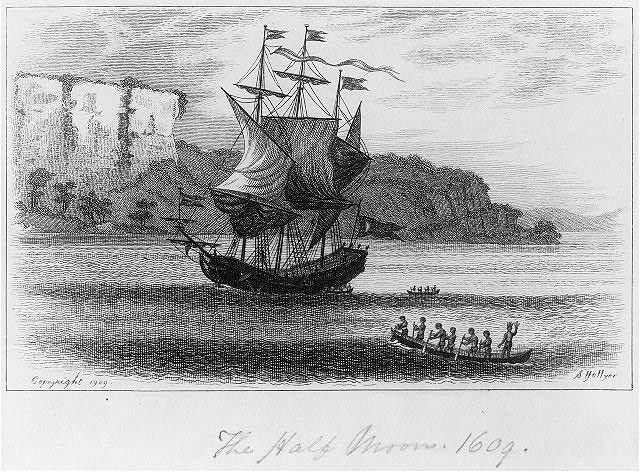
One of Hudson’s crew members, Robert Juet, kept a diary of their journey. At first, things seemed to mirror Verrazzano’s peaceful visits as the crew encountered the Lenape. The Lenape offered them “Indian Wheat” and tobacco. But Hudson, unlike Verrazzano, decided to explore further up the river, still hopeful that it might serve as a passageway to the North Pole. When he reached Albany and realized this was not the path he had envisioned, something changed on the way back.
I’ve heard different versions of what happened next, but none of them are happy. A violent clash erupted between Hudson’s crew and about 100 Lenape canoes. Many Lenape lost their lives that day. Such a different ending from Verrazzano’s visit, and a foreshadow of the things to come.
Hudson returned to Europe and although he did not find the passage he sought, he like Verrazzano, brought with him many tales of the untamed wilderness perfect for fur trading. The Dutch West Trading Company saw opportunity where Hudson saw disappointment. Within a few years, they sent Adriaen Block to map the coast line and river valley region. During his fourth voyage to the lower Hudson, his ship was accidentally burned. But the Lenape helped him through that bitter winter, teaching him how to survive and helping him build a new ship. With this new ship, he explored the East River and ventured as far as what we know now as Hartford Connecticut. Without the kindness of the Lenape, I doubt he would have lived to do any of this. Oh the irony of it all - their generosity helping to create the very maps that would guide others to claim their land.
I hope you enjoyed this glimpse into Jersey City’s deep past. The next section of this chapter, “The Land Grab,” explores what happened when the Dutch arrived, a more difficult part of our history, but one that needs to be told.
This book project has been years in the making, and your support truly makes the difference between it remaining a dream and becoming a reality. If you’d like to read more excerpts like this and help bring “If These Walls Could Talk” into the world, please consider becoming a paid subscriber.
As we head into the holidays, I’m grateful for this community of people who care about Jersey City’s stories—the beautiful ones, the difficult ones, and everything in between. May we carry forward the stories of those who came before us with respect and care.
Nat
"everything changed in 1609, when Henry Hudson, an ambitious little fellow, sailed into our harbor..."
Hudson also played a role in Canadian history. Soon after his visit to the Lenape "homeland", he took north to search for the mythical "northwest passage" to Asia. In the process, he discovered the watershed named for him- Hudson Bay- which served as the namesake of the powerful fur trading company which would play a prominent role in developing much of what is now Canada.
Unfortunately, Hudson was a strict taskmaster and earned the wrath of the crew of his ship, who mutinied and set him adrift to die in the cold Arctic temperatures.